Supply Chain Instabilities Create New Opportunity for Digital Production Printing
IT Strategies is een Amerikaans consultancy-bedrijf, gespecialiseerd in digitaal printen. Vicepresident Marco Boer, inderdaad met Nederlandse roots (op zijn 12de naar Amerika is geëmigreerd vanuit Rotterdam), duikt vaak op als spreker op grafische conferenties en publiceert regelmatige artikels & opinies. In deze Eye Opener kan je Marco’s analyse lezen over hoe de papierschaarste opportuniteiten voor digitaal printen genereert.
COVID has dramatically disrupted the world’s supply chain, as shipping companies desperately try to re-align the world’s shipping containers. Factories have been slow to re-start, as government support and lingering COVID infections among the unvaccinated have slowed the re-boot of the general economy. The print industry has not been exempted from the woes of supply chain disruption, especially when it comes to the availability of paper. The shortage of paper has caused paper prices to increase ~15% during the last 12 months, with another few rounds of anticipated price increases yet to come.
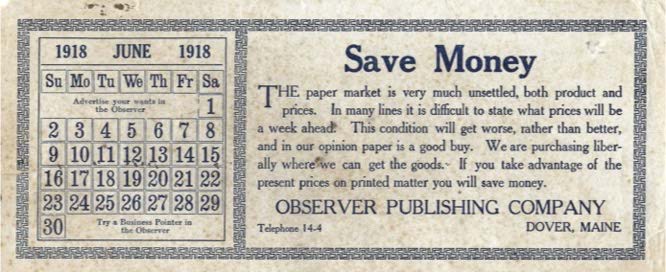
Some might say this is just another cycle that the paper industry is going through, as supply and demand is out of balance. There is a long history of imbalance between supply and demand as the 1918 advertisement illustrates below.
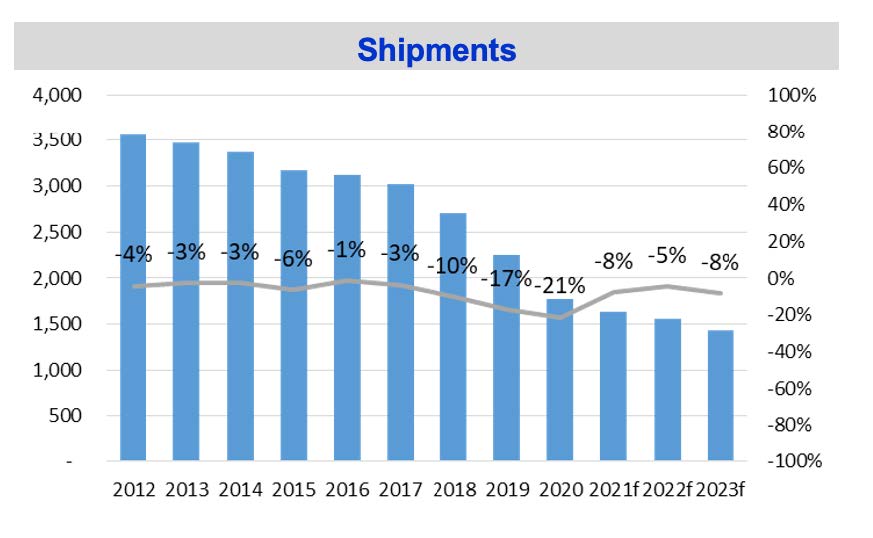
IT Strategies believes this time around the imbalance may be different to what we’ve seen in the past. The reason for this is the systemic decline in printing and writing papers in the commercial print industry. Since 2012, demand for (mainly offset) paper has been declining about -3% on average. In 2019 (pre-COVID) demand dropped -17%. In 2020 during COVID, demand dropped a further -21%. Effectively supply of printing and writing papers has dropped by nearly -50% during the last decade, with a further -7% average decline projected annually through 2023.
The core reason for the decline is reduced demand. As more communication shifted to electronic communication, less print was needed. The newsprint, magazine, and catalog industries are extreme examples of this, and commercial print is following in publishing’s footsteps.
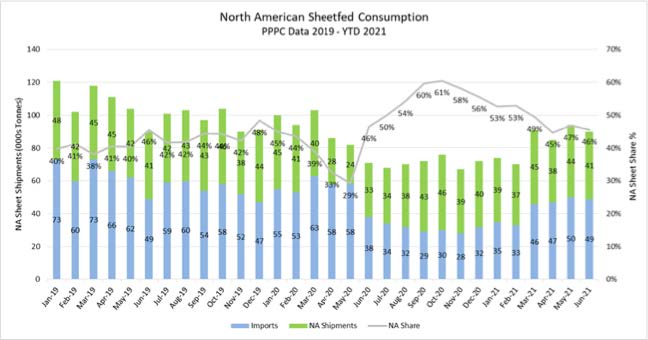
You may question why demand dropped so significantly in 2019, before COVID. The answer lies in paper imports. In 2018 imported paper flooded the market, capturing upwards of 60% share captured through lower prices. US and European paper mills will tell you that they’ve suffered through decades of price erosion, a claimed backed up by the fact that the price per tons has not changed in about three decades. In 2019 many of the US paper mills decided they could no longer compete in printing and writing papers, and started to shut down mills and/or convert them to more premium/heavier weight papers for the packaging industry. This led to a reduction in supply, which in turn drove up paper prices to the point where print customers (with flat print budgets) could no longer afford to buy as much print. This caused the 17% decline in demand for printing and writing papers in 2019.
Then COVID hit, and especially in Q2/3, 2020 demand for commercial print dropped dramatically. With COVID, the ability to import papers became limited, and the share of US paper mills (and European mills in Europe) drove back up to over 60% (see figure 3). Rather than using this opportunity to reduce prices to gain even more share, US mills elected to increase prices to recover revenue that they had been losing for decades. Their claim is that pulp raw material prices increased dramatically as the cost of labor increased due to the availability of fewer workers.
Regardless of the underlying causes, until paper imports increase, prices of paper will continue to increase. Depending on the pundits, there general consensus is that paper prices will not stabilize until second half of 2022 at earliest, perhaps 2023.
The Return of Demand for Print
While the return in demand has been uneven so far in 2021, two core applications stand out. Direct mail and book printing have seen a strong recovery in demand.
As part of direct marketing communication, brands are starting to become leery of consumer’s fear of double-clicking on e-mail messages and social media in order to easily access their brands. Consumers are becoming more fearful of “click-bait”, concerned about imposters trying to gain access to their data. Direct mail is considered a safe on-ramp for consumers to scan a QR-code or type in a keyword to access a brand directly without fear of entering a fraudulent site. With the resurgence in demand for direct mail, print providers are scrambling to get enough paper allocated for the campaigns customers want to run.
This is a serious problem as many print providers have been told their allocations will be reduced going forward, often by 20% or more. Few mills if any are taking on new customers, as selling paper to a new customer reduces availability for long-term good customers even further. To compensate, print providers and their customers are learning to become more flexible on the type of paper they’ll accept for print jobs. Premium papers are still available (at higher cost), and frequently they’ll accept old stock of specialty paper (linen white for example) that may have been in inventory somewhere for years.
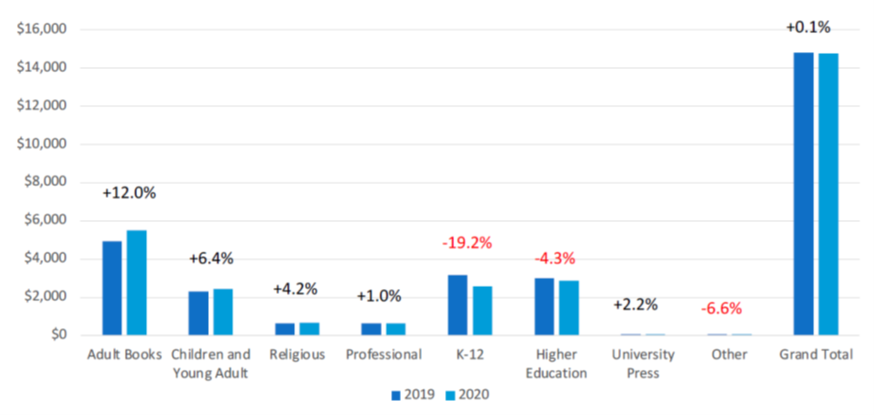
The book industry has also been growing, even during COVID. A decade ago there were strong fears that printed books would be replaced by e-readers, but e-reader share never topped 30% in the US and is now down to about 15% of all books published. Note that the only book segment that saw a decline during COVID was educational books, as schools were often closed and there was less tax money available to fund public education.
With readership strong, there is a unique driver in the US market called Amazon, which now accounts for over 50% of all trade book sales in the US. (In Europe most books remain sold through independent storefront retailers since discounting of books is often prohibited by law, reducing the incentive to buy for a lower price online). Amazon has changed consumers expectations on delivery time and runs lean inventories. With lead times from the Far East now 3+ months, and shipping costs that are 3-4X higher than 18 months ago, on-shoring of books has become very attractive since both lead times and shipping costs are dramatically less, even as print cost is higher.
The Opportunity for Digital Print in Direct Mail and Books
In the direct mail segment, rising costs for paper (and postage) are putting pressure on making sure that whatever is printed is more relevant. This is driving up the use of versioning and personalized direct mail, which IT Strategies estimates now accounts for 40-50% of direct mail. The implication of personalization and short-run versioning is clear: it must be digitally printed.
More critically, for the first time in many years rising cost are enabling print providers to shift the conversation from “lowest cost/thousand pieces” to “what can we do for you to ensure your print budget has a strong return on investment”. It is starting to allow print providers (if they can get past procurement to the right C-level) to take on a consultative partner role with their clients, allowing them to recommend types of direct mail that is impactful and has media available for printing. For example, the shift to postcards is likely to continue going forward. At the moment, there is a shortage of 9-point cardstock often used for postcards, but 12-point stock is available (at higher cost).
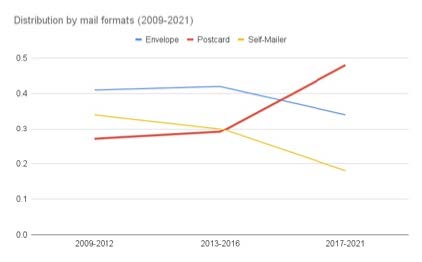
The combination of higher cost and the consultative advice is enabling direct mailers to add a little extra margin for direct mail jobs. It is also driving more volume to digital production printers, particularly benefiting production inkjet printers.
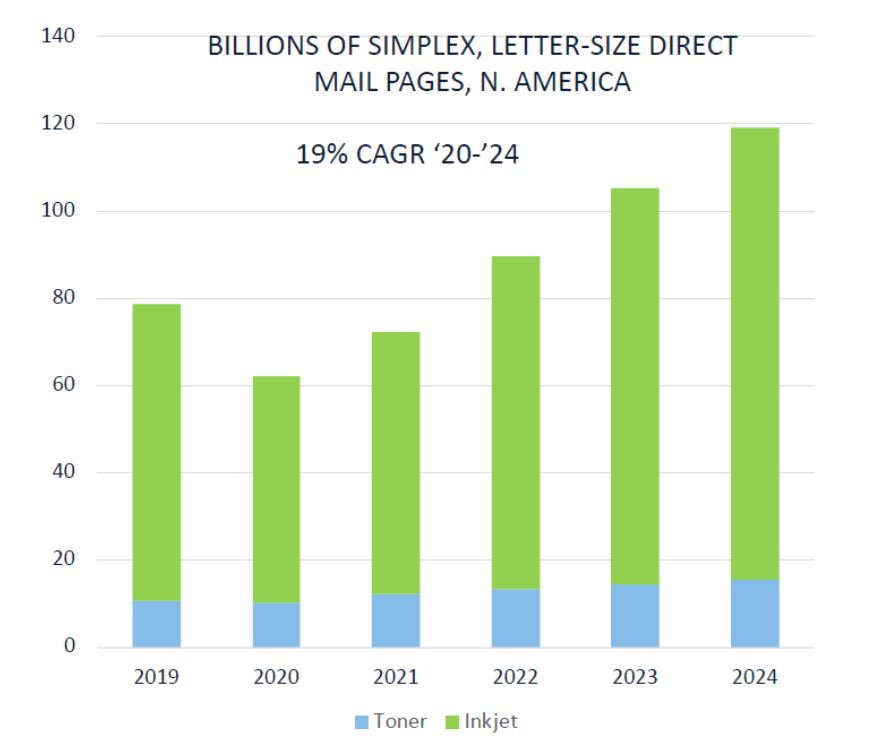
With the on-shoring of book manufacturing, the vast majority of books are still offset printed. However, as run lengths continue to trend down, and publishers (and authors) are discovering the ability to add color images and graphs at nominal cost when using production inkjet printing, the growth of inkjet book pages is extraordinarily strong.
Amazon sources the majority of its digitally printed books from independent book manufacturers like Ingram/Lightning Source, but increasingly from smaller independent book manufacturers who are able to meet Amazon’s stringent turnaround demands.
As a result, IT Strategies expects the growth of digitally printed pages to be nearly 20% compounded annually through 2024.
The Bottom Line
The supply chain disruptions are a problem for the print industry, especially related to the availability of paper. Short supply has driven up the cost of commercial printing and writing paper by 15% in the last 18 months, with further price increases anticipated though mid-2022. With print budgets flat, this means whatever is printed has to be more valuable, leading to the growing opportunity to leverage the benefits of digital printing: short-run, just-in-time, micro-versioning and even personalization. Direct mail print providers have an opportunity to shift from a procurement to a consultative relationship, charging more for the value there are adding. Book manufacturers are benefiting from an on-shoring of book manufacturing, as shipping delays and increased shipping cost of printed books from the Far East has made imported books less attractive to retailers like Amazon.
While COVID has been extremely disruptive, it is also enabling the opportunity for digital print in select applications like direct mail and books to increase its prices for the first time in decades.
